/PIC_H_LOGO_1.svg "PIC dental")
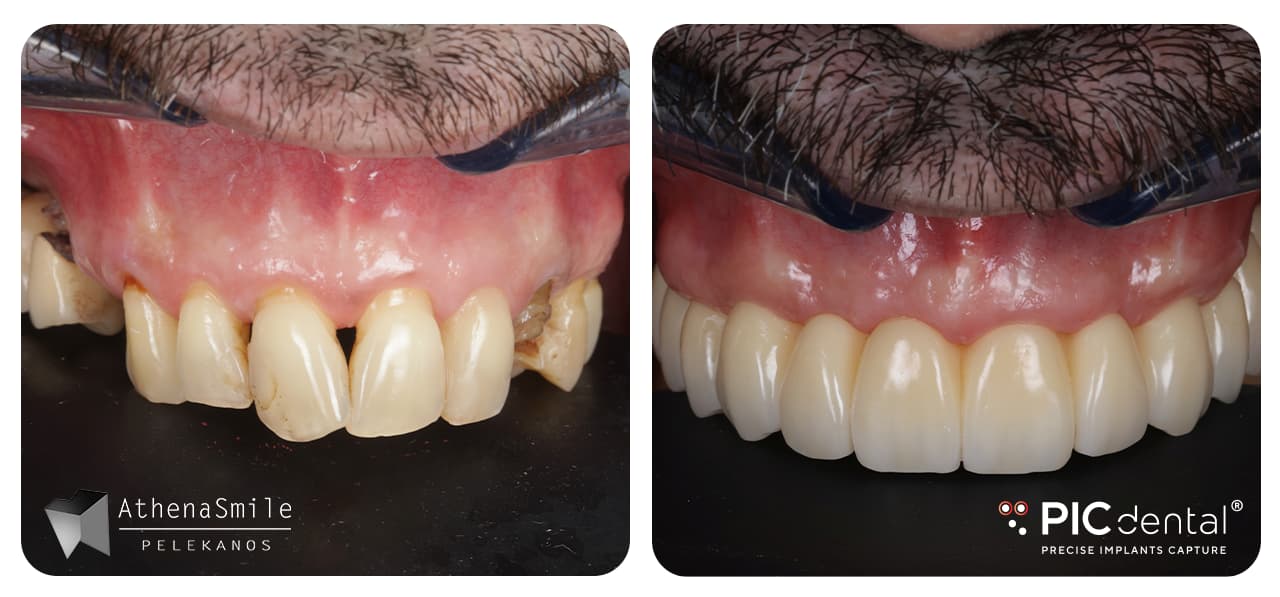
This video presents a summary with real footage of the clinical case described on this page (see video on YouTube)
Introduction
In this clinical case, Dr. Stavros Pelekanos addressed a complex situation involving several health challenges in the patient by performing an upper jaw restoration without extensive surgery, while achieving an aesthetic transformation. PIC system was used for implant capture to achieve a passive fit for the final prosthesis.
Clinical case
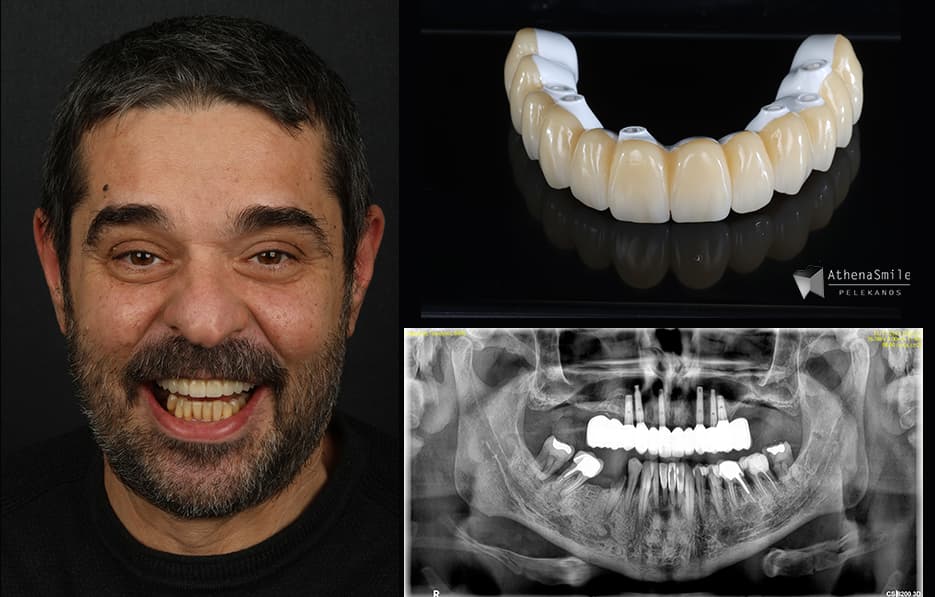
A 52-year-old healthy male patient visited AthenaSmile Pelekanos for rehabilitation of the maxillary arch, with plans to address the lower jaw at a later stage. His main concerns included multiple missing teeth, localized pain in certain areas, difficulty chewing, and dissatisfaction with the aesthetics of his smile.
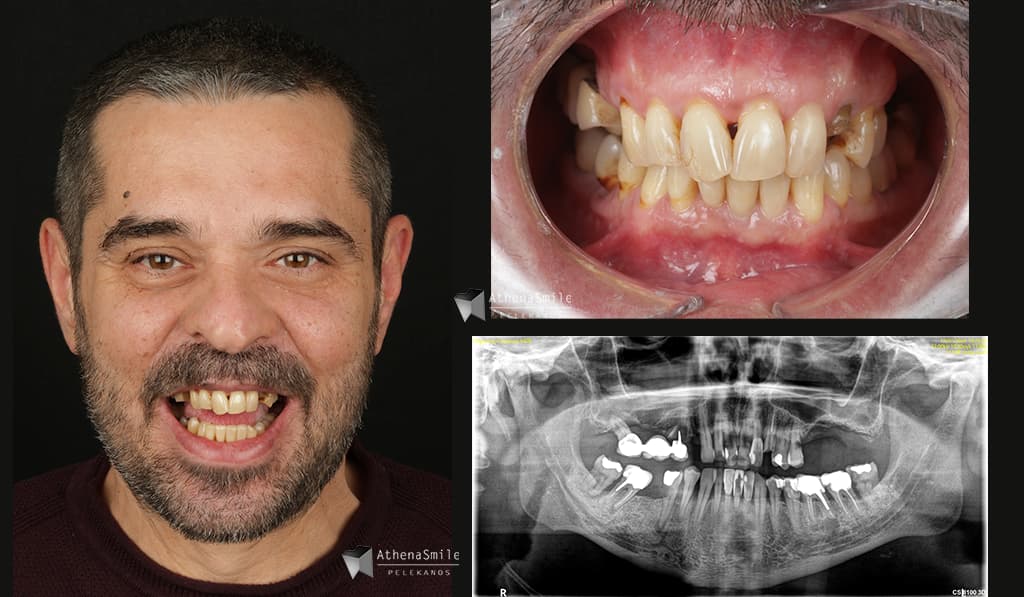
Patient's initial photographic and radiographic documentation
The patient had neglected his dental health for many years and wanted a comprehensive, long-term solution for rehabilitation, ideally without multiple surgical procedures or unnecessary discomfort.
Following a thorough radiographic and clinical evaluation, the patient was diagnosed with advanced periodontitis and multiple non-restorable teeth. Additionally, significant bone deficiency was identified in the posterior regions due to the extension of the sinuses.
To determine the most appropriate treatment plan, a comprehensive diagnostic protocol was conducted. This included a CBCT scan, intraoral and extraoral photographs, intraoral scanning, facial scanning, and jaw tracking analysis.
Upon evaluating the photographic records, issues such as excessive maxillary tooth display, an uneven occlusal plane, and tooth crowding were identified.
The treatment plan prioritized restoring the patient’s aesthetics by designing the final desired restorative outcome using Smilecloud software before any clinical intervention. This approach allowed the definitive prosthetic design to serve as a guiding reference for the clinician throughout the entire treatment process. It also gave the patient the opportunity to visualize the potential outcome on his own face, making the process feel both real and achievable.
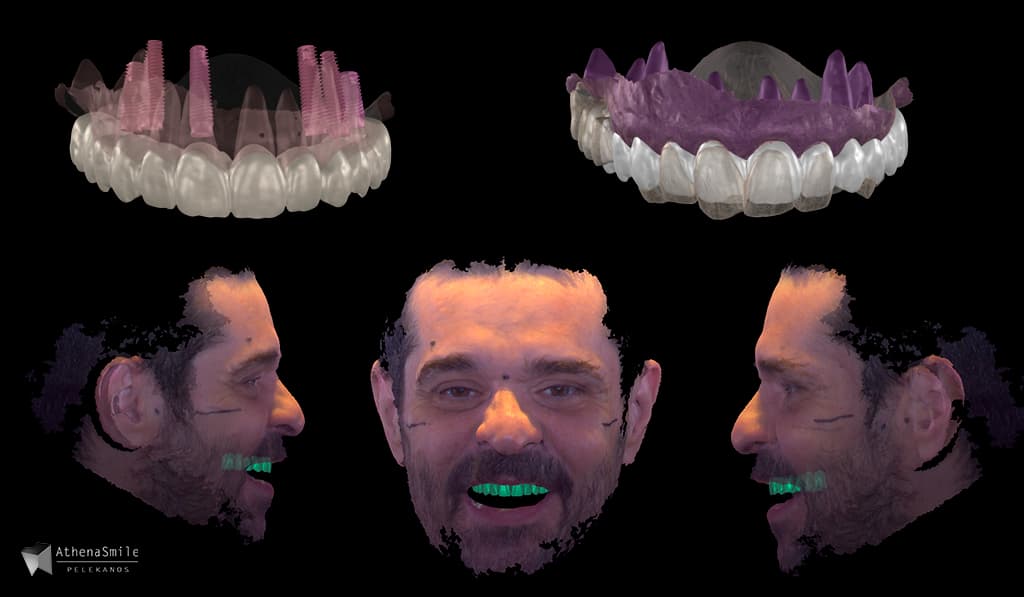
Design planning carried out using Zirkonzahn software, incorporating the patient's facial references from Facehunter
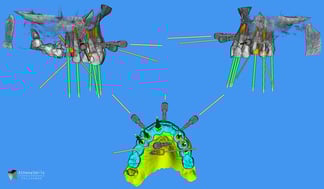
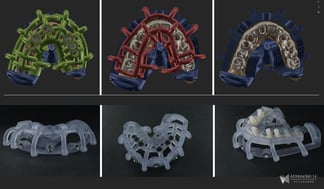
Implant positioning planning done with SMOP software and stackable guides for a fully guided surgery (positioning , implant and prosthetic guide)
After a thorough evaluation of the collected data, and considering the patient’s wish to avoid multiple surgical interventions, it was decided to proceed with the extraction of all maxillary teeth. This was followed by the guided placement of six TRI matrix implants in positions 14, 13, 11, 23, 24, and 25, allowing for a fully digital, abutment-free wax-up design and the delivery of an immediately loaded provisional restoration in a single appointment. This approach eliminated the need for a second surgical procedure, such as sinus lifts.
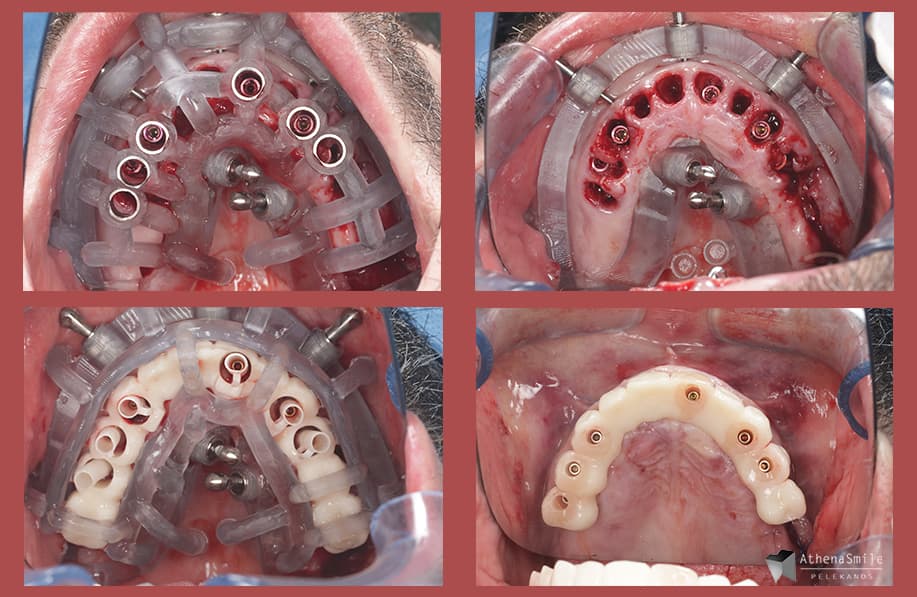
New PMMA Provisionals
/PIC_SYSTEM_H_LOGO.svg)
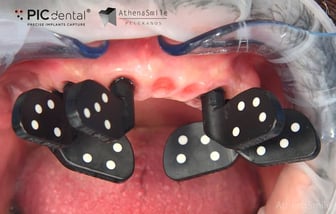
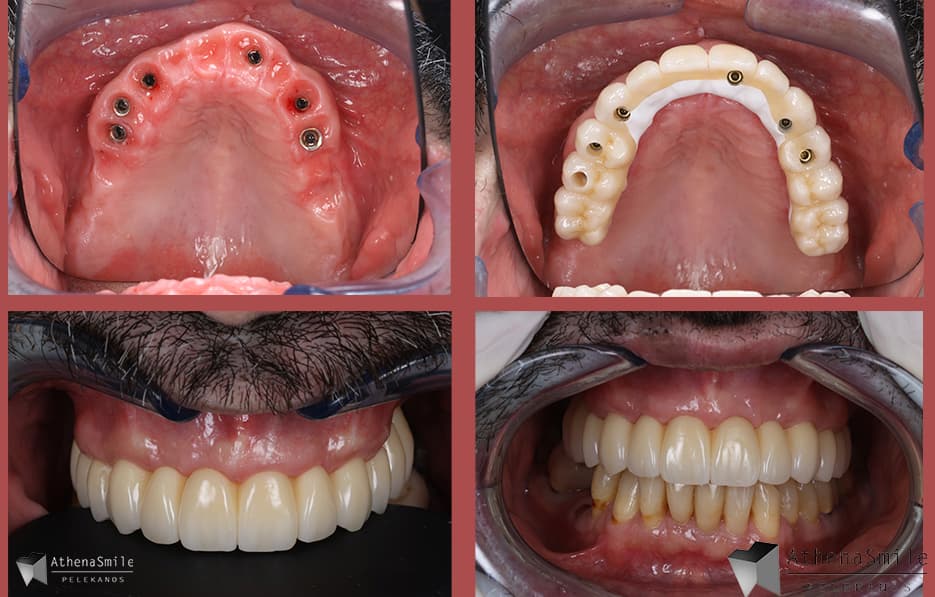
The second stage of treatment was scheduled for three months after implant osseointegration. An initial impression was taken, and new provisional restorations were provided for contouring the soft tissues. Three weeks later, a detailed registration of the peri-implant soft tissues and the three-dimensional position of the implants was performed using an intraoral scanner and PIC system.
The definitive full-arch FP1 Zirconia ICE plus Prettau 3 restoration was then fabricated and delivered, offering optimized aesthetics, function, and long-term stability.
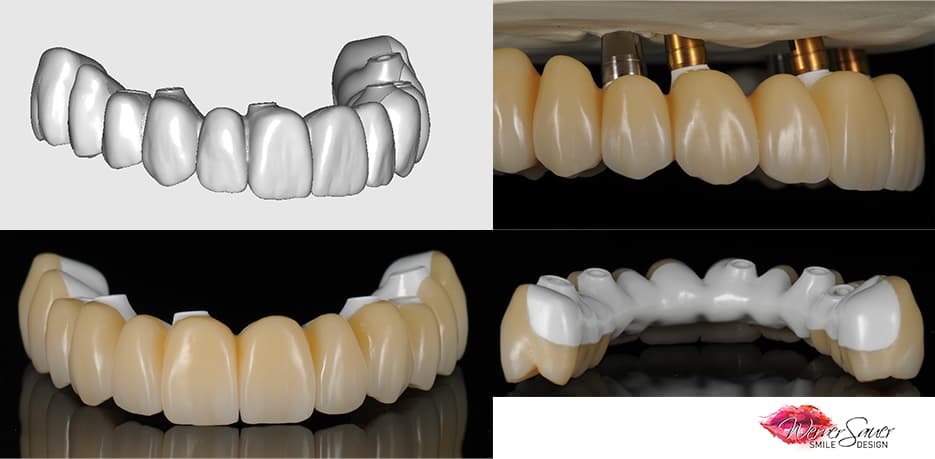
Definitive prosthesis designed at Werner Sauer Smile Design lab
 Zirconia ICE was chosen for this case because of its very high strength and fracture resistance, which is crucial given the FP1 restoration with cantilevers, as well as its excellent biocompatibility with soft tissue contours. When combined with Prettau 3 zirconia, this solution provides a highly aesthetic restoration for the patient.

This procedure was conducted by Dr. Stavros Pelekanos at the AthenaSmile Pelekanos clinic in Athens, Greece, in 2025.