Photogrammetry pioneer in dentistry
The story of an unexpected discovery
Adrián Hernández Gutiérrez, our founder, is an engineer specializing in 3D scanning, reverse engineering, CAD/CAM and quality control, with years of experience working in the aerospace and automotive industries.
One day in 2008, when having dinner with family, there was suddenly a loud "CRACK!" sound.
His father had a full arch dental prosthesis rehabilitation the year before, supported by 7 implants. It was this metal-ceramic prosthesis that suddenly broke in half.
Adrian learned that, back then, dental prostheses were first manufactured and tested over a plaster model of the mouth to validate their precision before being screwed on the patient's implants.
It seemed that his father's prosthesis had a perfect passive fit over that plaster model, but not over the actual implants in his mouth. This difference of precision caused the eventual fracture.
A better solution
With his background in cutting-edge industrial measurement technologies, Adrian looked into the latest state-of-the-art solutions that were available at the time for capturing implant positions, such as 3D scanners.
He asked his father's dentist and prosthodontist whether they were familiar with any of these new technologies and was promptly told that "these systems are not mature enough, and they are prohibitively expensive".
This raised his curiosity and, a few weeks later, he quit his job and founded PIC dental.
During 2009, PIC camera and PIC transfers were developed and finally, at Expodental 2010 in Madrid, the PIC system was launched.
PIC camera stability matters
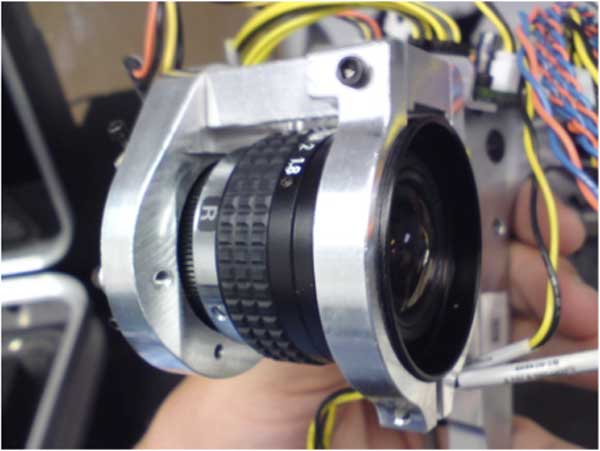
A key requirement in the manufacturing of optical measurement equipment is the stability of its lenses; when we decided to develop a stereo camera, we knew that the positioning of the optical components and the angle between them were of great importance. For this reason, we developed a structure capable of integrating the optical components and sought a material that would not deform with temperature changes.
Thanks to these sound decisions, we succeeded in building the most accurate optical measurement system in the world—not only in dentistry, but across the entire industry.
PIC transfers 3D coded abutments
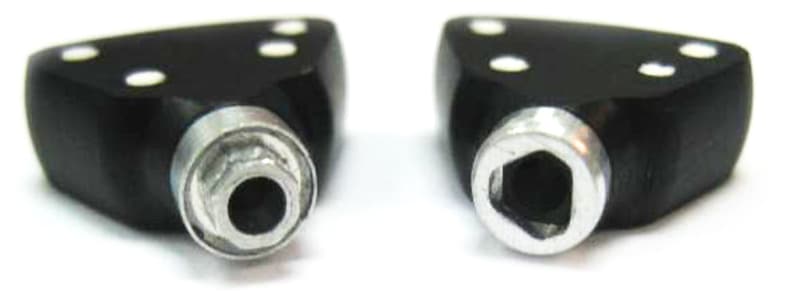
Creating a photogrammetry target was a real challenge; initially, they were made of anodized aluminum, featuring a common body with custom interfaces for each specific implant.
Issues such as light reflection from the metal, wear on the anodized coating, and a lack of accuracy between the components led to a loss of precision. We began searching for new materials, this time opting for a design where the connection to each implant platform was integrated directly into the body of the PIC transfer, using a material that would eliminate reflections. We needed a material that allowed for high-precision manufacturing, offered long-term durability, resisted deformation, and was both biocompatible and sterilizable.
PIC dental today
PIC dental went on to become the maker of the world's leading photogrammetry solution for implant impressions, the PIC system. Besides the technology, for the last 15 years the company also evolved its PIC pro workflow and completed PIC pro trainings at hundreds of dental practices and labs.
Today, PIC dental solutions are used internationally all over the world, and the PIC system has been extensively validated by 60+ peer-reviewed scientific studies (so far!). The company continues committed to improving the quality of full arch implant restorations while reducing costs, work, delivery time and patient appointments.